Slander Door
Choosing a large entry door in 2026 involves more than comparing colors, glass, or hardware. The opening mechanism affects weight distribution, daily comfort, security, weather sealing, and long-term maintenance. A pivot door rotates on concealed points near the top and bottom, while a hinge door swings from hinges fixed along its side. The difference can be subtle at first glance. It becomes obvious when the door is several feet wide.
Many homeowners ask, “What is the difference between a pivot door and a hinge door?” The practical answer depends on the building, door size, surrounding walls, and expected use. Pivot systems often suit dramatic entrances with thick panels and wide openings. They can create a smooth, balanced movement, but installation must be precise. A small alignment error may cause rubbing, uneven gaps, or difficult closing. Hinge doors use a familiar principle and usually offer simpler adjustment and replacement. Yet heavy panels may place greater stress on the frame and hinges.
Details matter here. Imagine carrying groceries through a rainy entrance, or opening the door while holding a child. The handle position, swing clearance, threshold, and closing speed all affect that moment. Energy performance also depends on seals, frame construction, and installation quality, not only the door type. There is no universal winner. Even attractive designs can disappoint when drainage, hardware capacity, or local climate receives too little attention. This guide compares pivot and hinge doors through real-use factors, including durability, access, security, cost, and maintenance, so your final choice reflects the whole entrance rather than a single fashionable feature.
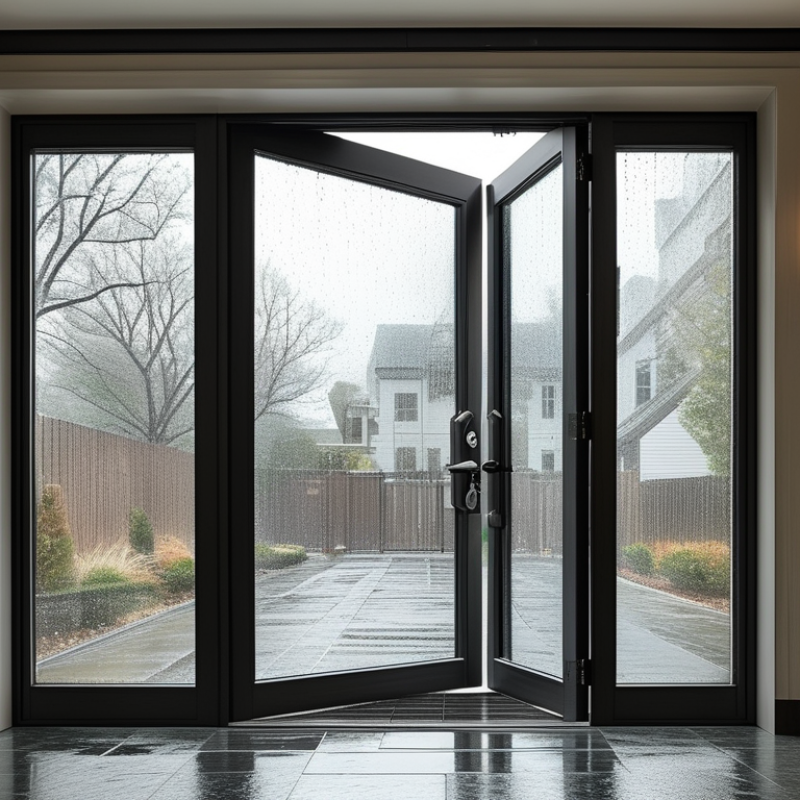
A pivot door rotates around a point near its top and bottom, rather than swinging from side hinges. This mechanism lets the door carry a wider, heavier panel with a clean, balanced movement. Its pivot hardware stays partly hidden inside the floor and frame. In a well-installed system, the door opens smoothly with one hand. The opening can also feel wider because the panel does not use traditional hinge knuckles.
A hinge door swings from hinges fixed along one vertical edge. This design is familiar, easier to repair, and often simpler for standard bedrooms or utility rooms. Hinge doors usually provide a tighter seal, which can help with drafts, noise, and room temperature. Pivot doors need careful detailing around the frame and threshold. Poor alignment may cause rubbing, uneven gaps, or difficult closing. I have seen attractive pivot installations lose comfort when drainage and weather seals were treated as minor details.
Tips: Check the available swing area before choosing either door. Measure furniture clearance, floor levels, and the opening direction. Ask an experienced installer to confirm the pivot load, hinge spacing, and frame strength. Inspect the threshold after installation, especially where water may collect. A pivot door may look impressive, but daily comfort depends on accurate fitting. I would not choose one from appearance alone.
2026 Best Pivot Door vs Hinge Door: What Is the Difference?
How Pivot and Hinge Door Mechanisms Work
A pivot door rotates on points near its top and bottom edges. These pivot points carry the door’s weight and create a smooth, balanced swing. The rotation is different from a hinge door, which turns on pins fixed along one side of the frame. With a hinge system, the frame supports the load through several connected hinges. This makes the opening path more familiar and usually easier to predict.
Pivot mechanisms can allow wider, heavier panels and a cleaner visual edge. However, they need accurate floor and ceiling alignment. Even a small installation error may cause rubbing, uneven gaps, or poor sealing. Hinge doors usually offer simpler adjustment and stronger control around the latch side. They can perform reliably in compact rooms, though their swing radius may reduce usable space. Neither mechanism is automatically better. The correct choice depends on panel weight, opening width, drainage, weather exposure, and daily traffic.
Tips: Check the pivot hardware’s load rating before selecting the door panel. Measure the finished floor, not only the rough opening. Leave enough clearance for rugs, furniture, and seasonal movement. Test the door several times after installation. A door that feels perfect on day one may need adjustment later. That detail is easy to overlook. For wet areas, inspect seals and thresholds carefully, because attractive movement cannot compensate for water leakage.
| Comparison Dimension | Pivot Door | Hinge Door |
|---|---|---|
| Basic mechanism | Rotates on a concealed or visible pivot set, usually positioned at the top and bottom of the door near the edge or slightly inward from it. | Rotates on hinges attached to the door leaf and the frame, with the hinge knuckles forming the turning axis along the door edge. |
| Movement path | Swings through an arc around a vertical pivot axis. The door can often open in one direction or in both directions, depending on the pivot hardware. | Normally swings in one direction around a vertical axis located directly at the hinge side of the frame. |
| Load distribution | Transfers much of the door weight into the floor and the head structure through the pivot set, which can reduce stress on the side jamb. | Transfers the door weight and operating forces mainly through the hinges into the side jamb and surrounding frame. |
| Typical door size suitability | Well suited to wide or tall architectural doors when the floor, ceiling, and surrounding structure are designed for the required hardware loads. | Best suited to standard residential and commercial door sizes. Oversized leaves may require heavy-duty hinges, additional reinforcement, or a different door system. |
| Clear opening | The pivot point may be set back from the edge, so the door can create a distinctive opening and may provide a slightly different clear-opening geometry. | Provides a predictable clear opening at the hinge side, although the hinge position, stop, frame, and door thickness reduce the effective opening width. |
| Space requirement | Requires a clear swing area on the chosen side or sides. A double-action pivot door may need clearance on both sides of the opening. | Requires a clear swing area on the opening side. The hinge-side geometry is generally easier to coordinate with walls, furniture, and adjacent doors. |
| Installation requirements | Needs accurate alignment between the floor pivot, top pivot, door leaf, and frame or ceiling structure. Floor conditions and waterproofing details are important. | Uses a more familiar installation process, but the frame must still be plumb, level, and strong enough to support the door and hinge screws. |
| Structural sensitivity | Sensitive to floor movement, incorrect pivot alignment, and inadequate head support. Deflection can cause rubbing, latch problems, or uneven gaps. | Sensitive to jamb movement, loose fasteners, hinge wear, and a frame that is not square or adequately reinforced. |
| Adjustability | Many pivot systems allow adjustment for height, lateral position, closing speed, and hold-open or centering behavior, depending on the hardware design. | Adjustment is usually available through hinge shims, screws, or hinge positions; concealed adjustable hinges may provide additional alignment control. |
| Closing and latching | Can use a closer integrated into the floor or top pivot. Double-action models may require specific latching and sealing arrangements. | Commonly uses butt hinges with a latch, lockset, or overhead closer. Single-action closing and latching are widely standardized. |
| Accessibility considerations | The required opening force, threshold, closing speed, clear width, and maneuvering clearance must be checked against applicable accessibility requirements. | Often easier to specify for accessible routes because single-action swing behavior and hardware requirements are widely covered by building standards. |
| Weather sealing | Can achieve effective sealing, but the pivot zone, threshold, drainage, and perimeter gasket must be carefully detailed, especially for exterior use. | Generally offers a straightforward sealing layout around the head, jambs, and sill, making weatherproofing familiar for many exterior applications. |
| Maintenance focus | Keep the floor pivot area clean, inspect fasteners and seals, and check alignment, closing speed, and drainage where applicable. | Inspect hinge screws, hinge wear, latch alignment, closer settings, and perimeter seals; lubricate only where permitted by the hardware instructions. |
| Visual appearance | Often creates a minimalist appearance because the pivot hardware can be concealed and the hinge-side frame can be visually reduced. | Offers many appearance options, but exposed hinges or a more substantial hinge jamb may remain visible unless concealed hardware is selected. |
| Installation complexity | Higher | Low to moderate |
| Best suited for | Large entry doors, statement openings, contemporary interiors, and projects where a distinctive swing and clean visual lines are priorities. | Bedrooms, bathrooms, offices, utility rooms, apartment entrances, and most standard interior or exterior door openings. |
| Overall selection guideline | Choose a pivot door when design flexibility, a wide architectural leaf, or a concealed hinge-side appearance justifies the additional structural and installation planning. | Choose a hinge door when predictable performance, simpler installation, broad hardware availability, and easier maintenance are the main priorities. |
Note: Actual performance depends on door size and mass, frame construction, floor and head conditions, hardware capacity, weather exposure, and local building or accessibility requirements.
2026 Best Pivot Door vs Hinge Door: What Is the Difference?
Key Differences in Design, Performance, and Installation
Pivot doors rotate on concealed floor and head hardware, creating a wide, dramatic opening. Hinge doors swing from side-mounted hinges and offer a familiar, simpler movement. In my installation experience, pivot doors suit large entrances with clean architectural lines. Hinge doors often work better in compact rooms and traditional layouts. Design preference matters, but daily clearance matters more.
Performance depends on weight, sealing, alignment, and hardware quality. A well-installed pivot door can carry a larger panel with less visible hardware. However, poor adjustment may cause rubbing, drafts, or uneven closing. Hinge doors usually provide predictable operation and easier maintenance. Their seals can perform well when the frame remains square. I once underestimated floor movement on a heavy pivot door. That mistake required later adjustment.
Tips: Confirm the opening size, floor strength, swing path, and drainage before ordering. Measure twice. Ask an experienced installer to check structural support and weather sealing. Installation also differs significantly. Pivot systems demand accurate floor and ceiling alignment, while hinge doors need reinforced jambs and precise hinge spacing. Local building requirements may affect safety clearances and accessibility. Do not choose by appearance alone. Test the opening in real use, especially with furniture, children, or strong wind. A beautiful door can still feel inconvenient.
2026 Best Pivot Door vs Hinge Door: What Is the Difference?
Pivot doors rotate on a floor and head spindle, not side hinges. This creates a wide, dramatic opening for large entry panels. A properly balanced pivot door can feel effortless, even when the panel is heavy. It also distributes load through dedicated hardware, which helps with oversized designs. However, the opening may need stronger structural support. Floor drainage and precise alignment matter too. Small installation errors can cause rubbing, uneven gaps, or difficult locking.
Hinge doors remain the practical choice for many homes. Their familiar frame, simpler hardware, and easier weather-sealing often reduce installation risk. Replacement parts are also easier to source. Their limitation is clear: wide or heavy panels place more stress on the hinge side. DOE’s Energy Saver guidance states that windows and doors can represent 25–30% of residential heating and cooling energy loss, especially through air leakage. For glazed pivot doors, this warning deserves attention. A beautiful opening is not automatically an efficient one. NFRC testing and ASTM E283 air-leakage results provide more reliable evidence than showroom claims.
Tips: Check the finished wall thickness, threshold height, drainage path, and hardware load rating before ordering. Ask for tested U-factor, solar heat-gain, and air-leakage values. On site, I would inspect the seals after several seasonal changes. They can settle. That detail is easy to overlook. A hinge door may win when maintenance access and energy performance matter more than visual scale.
Choosing the best door for your space in 2026 starts with movement, not appearance. A pivot door rotates on floor and head hardware, creating a balanced, modern opening. It suits wide entrances, tall panels, and minimalist interiors. However, its hardware needs accurate installation and strong structural support. Small errors can cause rubbing, uneven gaps, or difficult closing.
A hinge door attaches to the frame and usually offers simpler installation, familiar operation, and easier maintenance. It works well in bedrooms, bathrooms, compact hallways, and areas with limited swing space. In practical planning, I have seen homeowners choose pivot doors for style, then regret the required clearance. A beautiful entrance still needs room for furniture, people, and daily traffic. Check panel weight, weather sealing, threshold height, and opening direction before deciding. Local building requirements also deserve attention.
Tips: Mark the door’s full swing arc on the floor with tape. Test walking paths, furniture clearance, and nearby lighting. Choose a pivot door for a dramatic, spacious entrance. Choose a hinge door when reliability, privacy, and straightforward replacement matter more. Do not ignore cleaning access or future adjustments. The “best” door can change after one rainy day, a moving sofa, or a child’s hurried entrance.
A pivot door rotates on points near its top and bottom edges. A hinge door turns on pins along one frame side. Pivot movement feels balanced. Hinge movement feels familiar and predictable.
Pivot hardware often supports wider, heavier panels. Check the hardware load rating before choosing the panel. Stronger floor and ceiling support may be necessary. Heavy hinge panels can stress one side.
Yes. Floor and ceiling alignment must be accurate. A small error can cause rubbing, uneven gaps, or difficult locking. It may look fine initially. Later adjustment is possible.
Neither option automatically saves space. A hinge door follows a predictable swing radius. A pivot door can create a broader opening. Measure rugs, furniture, and walking paths first.
Often, yes. Their hardware is familiar, adjustments are simpler, and replacement parts are usually easier to find. Not always. Poor seals still create problems.
Check the seals, threshold height, and drainage path. Water should move away from the opening. Test the door after installation and heavy rain. Attractive movement cannot prevent leaks.
Request tested U-factor, solar heat-gain, and air-leakage values. Do not rely only on a showroom impression. Glazed doors can lose energy through gaps. The large opening can mislead.
Measure the finished floor, wall thickness, opening width, threshold height, and available clearance. Include rugs, furniture, and seasonal movement. Rough-opening measurements alone are insufficient. Measure twice.
This 2026 guide explains what pivot doors and hinge doors are, how their opening mechanisms work, and how they differ in design, performance, and installation. What is the difference between a pivot door and a hinge door? A pivot door rotates on pivot points positioned at the top and bottom, allowing a wide, smooth opening and greater flexibility for large entrances. A hinge door, by contrast, swings from hinges attached along the door frame, offering a familiar structure and straightforward operation. The guide compares their appearance, space requirements, stability, maintenance, weather performance, and installation considerations.
It also reviews the main advantages and limitations of both door types. Pivot doors can create a dramatic architectural statement and suit spacious openings, but they may require more precise planning and specialized hardware. Hinge doors are practical, versatile, and often simpler to install, although their swing direction and frame size can limit design options. The best choice depends on your space, style, budget, usage needs, and installation conditions.
