Slander Door
Slander Door
Slander Door
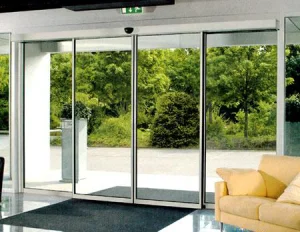
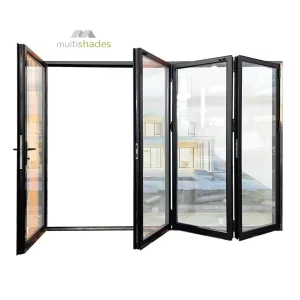

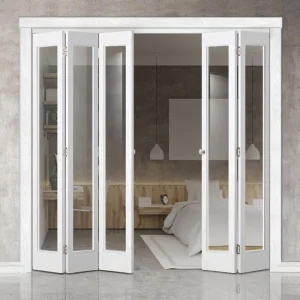
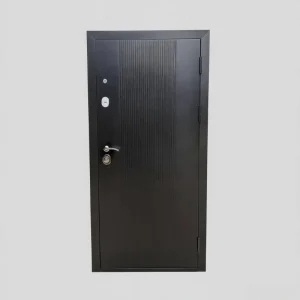
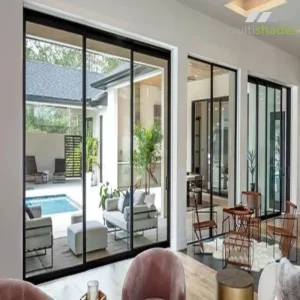
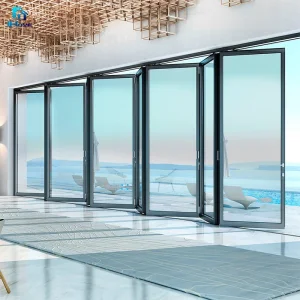
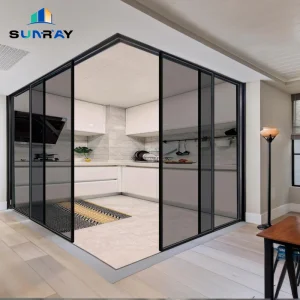
The international demand for high-performance exterior envelope systems has undergone a structural transformation. Architectural design trends have shifted decisively toward blurring the threshold between interior and exterior environments. Consequently, folding patio doors (commonly referred to as bi-fold, accordion, or concertina doors) are no longer viewed simply as premium decorative items. They are now integral engineered solutions designed to satisfy rigorous thermal boundary demands, acoustic dampening requirements, and structural loading metrics globally.
From a macroeconomic perspective, the global building fenestration market is driven by rising construction activities across developing urban hubs and a parallel surge in energy-efficient retrofitting projects in established North American and European markets. Modern folding doors utilize complex engineering consisting of multi-point locking systems, advanced thermal barriers, and precision-engineered track assemblies. This whitepaper analyzes the leading criteria that define the top manufacturers and exporters globally, with a focus on manufacturing integrity, technological pathways, and global trade compliance.
| Criteria Spec | High-End Structural Target | Standard Market Base | Architectural Impact |
|---|---|---|---|
| U-Factor (Thermal) | ≤ 1.2 W/m²K (with Triple Glazing) | 1.8 - 2.4 W/m²K | Exceeds Passive House goals and complies with Title 24. |
| Profile Thickness | 2.0mm to 3.0mm Structural Grade Aluminum | 1.4mm - 1.6mm Residential Grade | Supports high wind resistance and expansive panel sizes. |
| Water Penetration | Class 9A (EN 12208) / 450 Pa | Class 5A / 200 Pa | Ensures watertight performance during high-velocity storms. |
| Air Permeability | Class 4 (EN 12207) | Class 2 or 3 | Reduces energy losses caused by micro-drafts and infiltration. |
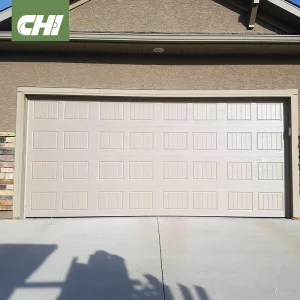
Zhejiang Slander Door Co., Ltd. stands at the forefront of China's garage door and rolling shutter door sector, delivering cutting-edge architectural door systems for global markets. Founded in 1994, the enterprise has developed into a specialized manufacturing powerhouse, delivering custom solutions to commercial, residential, and industrial builders worldwide.
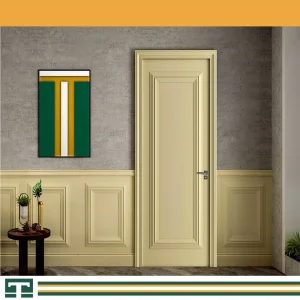
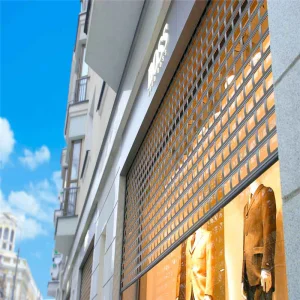
The manufacturer portfolio features a diverse suite of fenestration designs, spanning garage doors, rolling shutter doors, folding doors, aluminum-clad wood doors, sunrooms, wrought iron gates, and fence railings. Meeting the needs of modern modular building trends, Slander has expanded into innovative design sectors such as container houses, Apple houses, and curtain walls, providing buyers a unified, one-stop building envelope procurement solution.
Over three decades, Slander has built partnerships with contractors, distributors, and design firms globally. By prioritizing raw-material tracking, automated CNC extrusion processing, and strict quality control protocols, the company ensures that every folding door, commercial shutter, or customized architectural package delivers structural reliability and aesthetic elegance.

With a production foundation spanning over two decades, Slander provides structural custom solutions and handles complex logistics, port handling, and specific localized wind-load configurations.
Our manufacturing pipelines comply with international standards. We maintain formal compliance certification under EU No 305/2011 & Directive 89/106/EEC (CPD), validating our structural and quality control consistency.
Equipped with high-precision extrusion machinery across our 17,000㎡ plant, Slander delivers rapid manufacturing times for large-scale multi-unit commercial developments.
We understand the fast pace of international construction bidding. Our structural engineering team delivers complete custom project breakdowns and drawings within 24 hours.
From solar-integrated off-grid smart homes to slim-profile thermal break multi-fold systems, our R&D group works to balance high thermal performance with minimalist visual design.
Modern commercial and high-end residential designs require integrated structural systems. A primary challenge in modern building envelopes is achieving large, unobstructed openings without compromising the building's thermal envelope or structural integrity.
Beyond thermal considerations, structural engineers must evaluate how folding doors integrate with secondary components:
Exporting custom architectural components globally requires navigating a complex environment of tariffs, shipping logistics, and varying regional building codes. Leading manufacturers and exporters succeed by offering custom engineering tailored to the destination country's regulations.
For instance, exporters serving the North American market must meet specific structural ratings, such as NFRC certification for thermal efficiency and AAMA certification for physical air, water, and structural performance. In the European Union, the CE mark and compliance with EN standards (such as EN 14351-1 for external pedestrian doorsets) are mandatory. Manufacturers who invest in testing and maintaining these international certifications demonstrate a commitment to quality and regulatory compliance.
In addition, secure logistics packaging is essential for international transport. Heavy, oversized glass panels are vulnerable to damage during long-distance shipping and ocean freight. Top exporters use heavy-duty steel or timber crates lined with protective foam, along with moisture-absorbing desiccant bags, to protect the aluminum finishes and double-glazed units from corrosion during transit.
For architects and project managers, finding a supplier that understands localized building codes is critical. A standard bifold door suited for a calm inland valley will fail if installed on a coastal bluff exposed to high-velocity hurricane zones (HVHZ).
US projects require compliance with localized wind-load calculations (ASCE 7) and energy-efficiency standards. In states like California, folding door systems must meet strict Title 24 solar heat gain coefficient (SHGC) limits. Along the Gulf Coast, impact-rated laminated glass is required to resist storm-driven debris.
EU projects require compliance with EN 14351-1. This standard governs thermal transmittances (U-values), air permeability, and mechanical durability (tested up to Class 8 / 20,000 open-and-close cycles).
The Australian market requires testing to AS2047 for structural deflection, water penetration resistance, and air infiltration. Additionally, safety glazing must comply with AS1288 guidelines.
Zhejiang Slander Door Co., Ltd. addresses these diverse regional needs by offering custom glass specifications. Options include double-tempered or laminated glass panels, filled with argon gas and treated with Low-E coatings, to meet local solar and thermal targets.
Folding door systems are highly versatile, adapting to a wide range of layouts, spatial constraints, and architectural styles:
In restaurants, hotels, and retail spaces, folding doors can open entire facades during peak operating hours. This creates an open, welcoming entrance that helps drive foot traffic. When closed, these systems maintain a secure, weather-sealed envelope. For high-traffic entrances, integrating a practical daily-access swing door into the multi-panel folding system allows clients to enter and exit without folding back the entire wall.
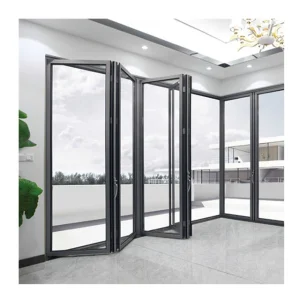
For high-end residential projects, bifold systems connect indoor living spaces directly to patios, pools, or balconies. Slander's slim-frame, thermal break designs maximize glass surface area, offering clean, unobstructed views while providing excellent insulation against harsh seasonal weather.
The architectural landscape is evolving rapidly, and folding door technologies are advancing to match. The industry is moving toward smarter, more sustainable, and highly integrated systems:
Integration with home automation systems allows users to control large folding door walls via smartphones, voice commands, or wind sensors that close the doors automatically when a storm approaches.
Vacuum Insulated Glass (VIG) offers the thermal performance of thick triple-pane glazing in a profile as thin as single-pane glass. This allows manufacturers to design lighter, slimmer, and more elegant frames.
Leading manufacturers are using recycled aluminum billets and VOC-free powder coatings. These materials help reduce the carbon footprint of buildings and contribute to LEED and BREEAM green building certifications.
Top-hung folding doors hang from an overhead track, with the rollers carrying the weight. This design is less prone to trapping dirt in the track and offers exceptionally smooth operation. However, it requires a strong overhead lintel to support the weight of the glass panels. Bottom-supported systems transfer the weight to the floor track, which is ideal for remodeling projects where adding heavy overhead support is difficult, though the floor track must be kept clean to ensure smooth operation.
Low U-factors are achieved using thermal break technology. Polyamide insulation strips separate the interior and exterior aluminum profiles, stopping heat transfer. This is paired with double- or triple-pane insulated glass units (IGUs) featuring low-emissivity (Low-E) coatings and argon gas fill, which significantly reduce heat loss.
High-performance folding doors are engineered to handle wind loads using thick-walled aluminum extrusions (2.0mm to 3.0mm), multi-point locking systems that secure the doors at the top and bottom of each panel interface, and heavy-duty structural hinges. They are tested under static pressure to verify performance during storms.
Zhejiang Slander Door Co., Ltd. offers extensive customization options, including custom panel configurations (up to 8 panels folding in either direction), precise dimension scaling, specialized powder coatings, integrated retractable flyscreens, and high-performance safety glass.
Compliance with EU No 305/2011 & Directive 89/106/EEC (CPD) confirms that the manufacturer's products are tested and certified to meet European safety, durability, and environmental standards. This simplifies custom clearance, minimizes trade barriers, and ensures compliance with local building regulations.